

While the majority of my wardrobe is not designer, I do own a few pieces by “designers” from well-known ones such as Burberry for their incredible trench coats to more independent labels like Toronto-based Smythe for their coats.
Not to mention as well, I do have a few thrifted items like my Manolo Blahnik heels (originally $700, found for $60!), or my Herve Leger cashmere and silk wrap ($300, originally $2000!).
.. but is it all really worth it?
Do I really feel a difference in wearing said designers over something that is a fraction of the price (at retail that is)?
Why yes.
I can honestly say that I do, but it doesn’t apply to everything, only to major pieces that require proper tailoring or craftsmanship such as coats or shoes.
NOT ALL DESIGNERS ARE THE SAME TO ME
Some designers for me, make such low-quality, kind of cheap-looking clothing that I inwardly roll my eyes when I pass their stores, such as Michael Kors.
I like his style aesthetic as being clean and sporty, but I find his line of clothing rather gaudy and cheap-looking, even though the price points are anything but! I’ve touched some of his pieces in-store, and always come away disappointed.

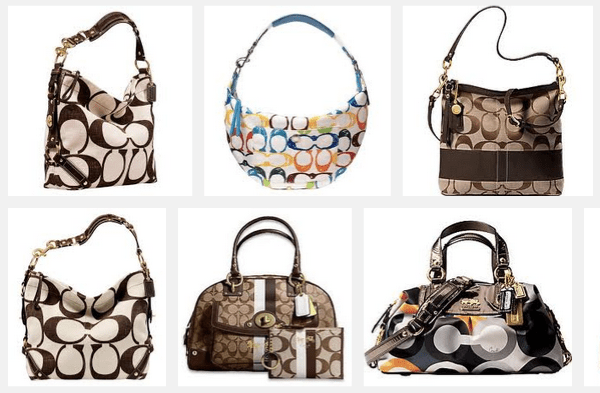
I rank him in the designer range of J. Crew, Banana Republic, and Coach.
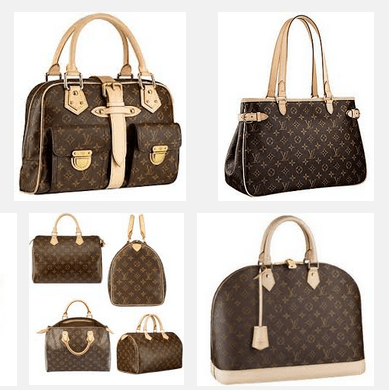
Other designers, I just don’t like the style of, such as Louis Vuitton or Gucci even if they’re well made. It’s just my personal preference that I loathe that ubiquitous brown print with symbols, or that flash of the tri-colour red, green and white.
There are some pieces that I could like from those designers, but their overall look is not my style.
While I do think the Burberry check is hideous as well, I can feel the quality in their clothing for trench coats, which is why they’re my go-to designer for a really great coat.
Otherwise, I tend to prefer lesser-known, preferably local designers such as Smythe (Toronto) for coats and blazers, or independent artisans like Erin Templeton (Vancouver) for bags.
THE DESIGNER STYLE AND CUT IS ALMOST ALWAYS NICER..
I find this especially true with designer coats and shoes but not so much in other categories.
Lower retail chains like Jacob, Dynamite, Forever 21 and so on, may have the LOOK of expensive designer coats (navy blue peacoats and the like), but the cut is almost always more general.
Their coat cuts have to fit a range of body types and styles, so an XS will look shapeless compared to a designer’s XS.
For instance, I bought a wool winter coat in an XS back when I was a student, and compared to the wool winter coat I have now from Burberry, the tailoring and fit is of no comparison.
Burberry makes an impeccably tailored and fitted coat, and lower-end retail stores simply don’t have the time, money or resources to produce such a coat and stick to their lower price points.

Of course, this is both good and bad — it’s great for us women who fit into those tailored shapes, and bad for those of us who don’t (although you can just buy one size up and have it tailored).
As for shoes, well.. if you have worn cheap $20 heels and came back home with blisters and pinched toes after only one day of working, you will know what I mean when I say that the right pair of heels can make all the difference.
I have found for my foot, Manolo Blahniks are the best, and that’s also due to the fact that they offer lower heels in the 2″ range rather than in those constant clownish 6″ – 7″ platforms that Jimmy Choos and Louboutins tend to sport.
Other items such as dresses, tops and pants, are a little more forgiving in this area because you can find great dresses for $30 that look and feel like their expensive $500 counterpart, just without the fancy label (Diane von Furstenberg).
THE MATERIALS ARE GENERALLY BETTER..
The materials in general, are better.
They tend to be silk, wool, cashmere, cotton, even rayon, over polyester or nylon (which makes you sweat like a pig in winter).
While this is not always the case, it is more likely that a blazer at H&M is going to be 90% polyester and 10% spandex with a polyester lining, whereas a similar looking blazer from a designer is going to be made of wool or cotton, with only the lining as polyester.
What’s the real difference other than the price?
The materials.
It’s not that H&M blazers are badly made, it’s that they don’t make them in nice materials (too expensive!), but if you don’t care about keeping it forever and are interested in disposable fashion trends, then it’s perfect for you.
Me, I tend to buy something only if I can see myself still wearing it when I am 90. That eliminates a lot of things I find interesting like leather leggings and skirts, but it does make me edit my shopping habits.
THEY GENERALLY LAST LONGER..
In coats, I have purchased in the past, what was an expensive coat for a struggling student — $200 for an ivory coat that had 10% cashmere in it from Jacob.
I wore it on and off for nice events and interviews, but after a few trips to the dry cleaners (white tends to get dirty very easily) I noticed that the coat started to look shabby and threadbare.
It pretty much lost it shape, looked like a cheap throw-on shapeless lump of a formerly-awesome wool coat, and made me rather sad because I had basically wasted that $200 when I should have just waited until I had more money to buy a far better coat.
Compared to the few trips I’ve taken to the dry cleaners with my significantly more expensive coats of today ($500 – $2000), they show no such signs of wear.
THEY ALSO TEND TO FEEL BETTER..
Due to no small part in the more natural fabrics used, the perfect cut of these coats and the overall higher quality, designer items TEND to feel better.
This is not always the case, but I can immediately tell by touching the fabric whether it is cheap cotton or not.
They wrinkle less, hang better, drape nicely, and it’s all partly due to the materials used in its construction.

BUT IS IT ALL REALLY WORTH THAT MUCH MORE MONEY?
The real trick for me is whether or not they’re X amount of money better than a cheaper version.
For instance, you need to gauge that it is worth an extra $300 more on the price tag for a sweater that uses wool instead of acrylic?
Perhaps not.
This is why I tend to buy coats in higher price points ($500 – $2000), and am open to buying shoes at a higher price point than $100 (just for the sheer sake of comfort) but am more resistant to spending the same range of money on a handbag or a pair of gloves.
I usually go through a thought process that starts with:
What I am wearing this for, how frequently, and how important is it to me for my personal style?
If it’s a pair of gloves, I am not inclined to fork over $1000 for a pair of designer leather gloves with a cashmere lining, or for a silk scarf just because it’s from Hermes.
I am perfectly happy with Lord & Taylor leather gloves with a cashmere lining that look and feel like the same thing, or other styles of silk scarves from artisans, just without the price tag.
Gloves and scarves, rank low in terms of designer and style importance to me, as do handbags.
With handbags, I can see WHY you would spend good money on a purse (so it looks and stays timeless), but I can’t bring myself to break the $300 point mark on a purse, because I personally don’t place a high importance on purses.
If it’s something that I wear constantly such as a coat, blazer or leather jacket, I am more inclined to spend more money. Coats in Canada are important, and they are also the main clothing item people see.

For me, if you get the coat right, you can wear a cheap white t-shirt underneath with a pair of beat up jeans, and still look instantly polished.
The same goes for shoes, but I say this mostly because I enjoy comfortable, practical, 2″ high or less shoes. I could certainly buy cheap leather boots at $100 for the same look, but if I am wearing them day-in and day-out, they better be comfortable.
FINAL WORD: Designer or not, it better look and feel like a quality product
I ignore the name or the label of who made it, and I focus on the big three:
- The materials — is it made of cheap polyester and acrylic, or cashmere and silk?
- The craftsmanship — where is it made, is it tailored well, will it last beyond a few washes?
- The style aesthetic of the piece — can I wear it until I am 90?
Afterwards, I look at the price only after I have determined what I would pay for such an item.
If the price tag says $500 and I am only putting an importance price tag of about $50 on it, I am not going to buy it.
If the price tag says $1500 for a coat, and I have researched and exhausted all other avenues of finding a similar trench coat without the brand name but with equal quality and craftsmanship, I am more inclined to bite the bullet and buy it.


