
The general consensus, seems to be:
“It’s so easy to not be poor, stop spending money on stuff“
This one, I already talked about here about being broke, being poor, and my views on the whole situation, and here about being privileged or hardworking in intensive detail.
TPM wrote a great piece on why poor people ‘waste’ money on luxury goods…and it hit on exactly what I couldn’t articulate but felt about clothing.
What the article does manage to do is clearly outline how I have felt about how I present, and it’s partly why I love fashion so much.
Clothing is transformative
I’ve said this before and I will say it again: It can turn you from a college student wearing a hoodie and sweats, to slipping on a draped dress with heels and being able to walk into a meeting and present.
It changes how you feel; I wouldn’t lounge in bed wearing a suit, would I? I want to be comfortable so I am going to wear leggings and a sweater!

My attitude completely changes if I were to go into a store well-dressed (not decked out, but in what I’d normally wear), versus if I am in something for work, which changes the attitudes of those around me and how they treat me.
I have informally tested this theory – wearing no makeup, hair in a ponytail held up by scrunchie no less, the ultimate ‘no’ in hair accessories (unless you’re a celeb and can wear even spandex bike shorts and call it fashion), and seeing how people treat me versus wearing a bit of makeup, with my hair curled.
The difference is subtle but there. I am signaling to them with my appearance (“Hey look I have both time AND MONEY to do this to my face and hair“) and they’re picking up all of these cues, either consciously or subconsciously.
Luxury goods are gatekeeper symbols
When you carry a very nice bag, and if people generally recognize it is a designer one via its logos, or not, it’s a status symbol that says: I am in the know, or I am not.
Someone who cares zero about fashion like my partner, would recognize a Chanel flap bag as Chanel, but would not see a Céline bag as a high end piece as well because he isn’t in the know.
But someone, who is into fashion like I am, will see a Céline Sangle a friend carries and squeal in happiness: YOU GOT HER!
Not even with only friends, but walking around with this bag, other people will see it, and acknowledge that YOU KNOW the bag, and THEY know the bag, which puts you in their group of those who know (and in a way, makes an indirect connection).

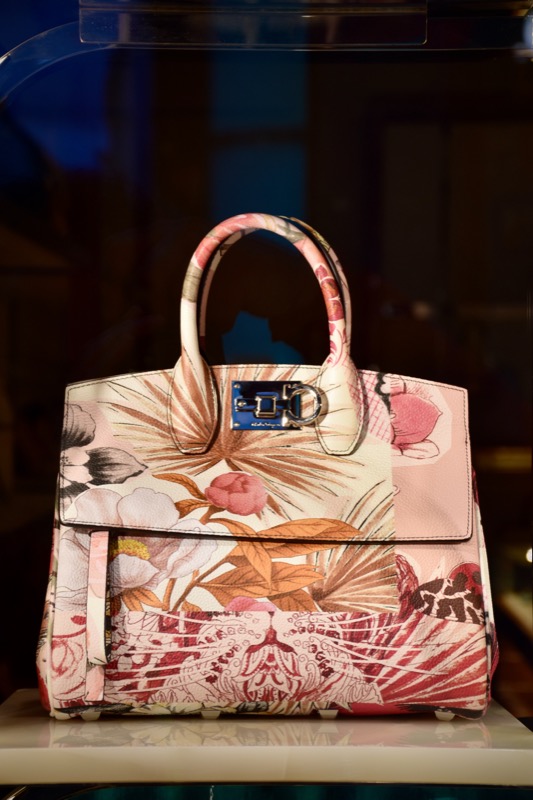
(Not a Céline Sangle, this is a Salvatore Ferragamo)
It sounds ridiculous but it’s really how society operates in a sense, the same way that if you outfit yourself head to toe in designer logos, you will not be taken seriously by anyone – those in the fashion know and those who are not. It’s simply unsaid, and not ‘done’.
So as she mentioned – if you’re wearing a tank top underneath a blouse instead of a silk shell – this signals to people where you’re at, status-wise – whether or not this seems fair to anyone, it’s how people make split second judgements about you.
Obviously, this can change when you get to know someone over time, and once I met a woman at work whom I thought I’d get along with because we seemed to have similar tastes in clothing/accessories, and I hoped we’d become shopping besties (!!), but alas, it was not meant to be as her inner ugliness and princess-like behaviour revealed itself to me as I got to know her. Once I ‘knew’ her true self, her appearance and taste in things, very similar to mine, didn’t matter at all.
But it’s true that what you eat, do, spend on, wear.. it all signals your social class, even if we want to believe we live in a class-less society that doesn’t care about all of that (spoiler alert: we as a society do care very much…)
‘Clean and presentable’ is the bare minimum but it isn’t enough
McMillan Cottom nailed it in the article about how being clean and presentable is the bare minimum.
Just because you can do it in cheap big box clothing, doesn’t mean that it’s enough and it’s just enough to be treated like a low social status person, one rung up from being homeless or in extreme poverty.
(Obviously exceptions apply but I am not talking about exceptions, I am talking about in general.)

Saying that “being clean and presentable” is enough, is actually a privilege that some wear as a badge: “Look how much I DO NOT CARE about things and how NON MATERIALISTIC I am.”
To this group, proudly saying this tells other people how much they value things that “actually matter” like saving money, or education, or being a good person (I am not disagreeing at all, and do consider these things important but not in the way it’s being flaunted).
It reeks of privilege because more often than not, these people can absolutely get away with being just ‘clean and presentable’ and refusing all else is because they already have lots of money, or have a strong family network to fall upon if anything goes wrong, or simply… have the correct colour of skin and gender, which protects them from the additional scrutiny heaped onto someone else who is also ‘clean and presentable’, but happens to be a woman of colour.
If you can be “clean and presentable” and show up for a job that isn’t minimum wage, you have some sort of privilege (past or present), working to help you. I could certainly do this today – wear a tee and dark jeans and still get hired (though I don’t dare, out of respect), but that’s because I have a lot of privileges that have been afforded to me, from my education, to my financial independence and lack of need for money aside from what I already have.
To get the job you actually want, to get out of the situation you’re in, you need to dress above that, which gives credence to the saying:
“Dress for the job you want not the one you have”.
…but that brings up another great point mentioned:
How do you actually know what the job above you dresses like, unless you’re told?
Imagine being a minimum wage retail store clerk, and your family and friends are all in the same social status. Now how would you know what an assistant secretary dresses like? You don’t have a point of reference to ask, and even Googling it doesn’t help because there is some seriously terrible style advice out there.

Nobody would know that you have to wear a silk shell underneath a blouse instead of a tank top. You just know it, because your friends do it and/or you’re in that circle to slowly notice and pick up on such details.
And besides, silk shells (unless secondhand), are quite expensive. No one teaches you to shop secondhand for these things, how to dress for a job – these are all skills and knowledge picked up by being in the social class, or being actively taught it (e.g. Dress for Success).
It also just isn’t clothing, it’s your hair, your makeup, the way you walk, talk, your piercings, your choice of jewellery, your shoes, your bag.. everything and anything can signal to someone where you fall on the scale of class for them, and as she pointed out in the article, she dressed really nicely for an interview and she was immediately assessed just on her clothing alone that she was too good for that job, and given a better one instead.
Imagine that kind of power, just in what you wear and how you present yourself. I would even go as far as to say that it matters for promotions as well – as superficial and as materialistic as it sounds – what you wear, how you speak, dress and act, all matters to signal to people where you are on the class ladder, which without a doubt, exists.
You cannot know what it’s like to be poor until you’re actually poor
To be clear: I have never been poor, but I empathize very strongly with those who are and I suspect it is why I do not hold the same views of others in my social status/class – I have my mother to tell me firsthand stories of growing up truly dirt poor, going without food for days, and even most of my family members (the ones whom I know of), live in poverty today, not having been able to escape the way she did.
$50 to me, is a few books but to them, it’s a fortune, so a lot of people who talk about being poor, are really talking about being broke.

It’s one thing to have money, and to spend it all to the point where you don’t save a penny because you’re wasting it on things, but it’s another to not actually have the income to begin with.
To truly be poor, you cannot know it until you are actually there without any help or a safety net, scrounging for coins to cover your bus fare, living in a crappy area of town because you cannot afford to live in a safe area and put food on the table, and to be unable to take on more work for more money because you have family obligations (perhaps a single parent), or you already spend 4 hours commuting a day for your one job, so taking on another one means all you would do is sleep, commute, and work.
Personally, I can only read about this intellectually or hear it from my mother firsthand, but I cannot and won’t ever experience it.


